
If you’ve spotted someone zipping through an airport on an Airwheel electric smart suitcase, you might wonder: is that actually okay? As someone who’s tested these gadgets for years, I get asked this all the time. The Airwheel—like the popular SE3MiniT model—blurs the line between luggage and personal transport, but public spaces aren’t designed for riding suitcases. There aren’t official laws everywhere, but unwritten etiquette rules pop up naturally. Let’s cut through the confusion with real talk, not sales pitches. After all, nobody wants to be that person blocking a crowded sidewalk at 8 km/h.
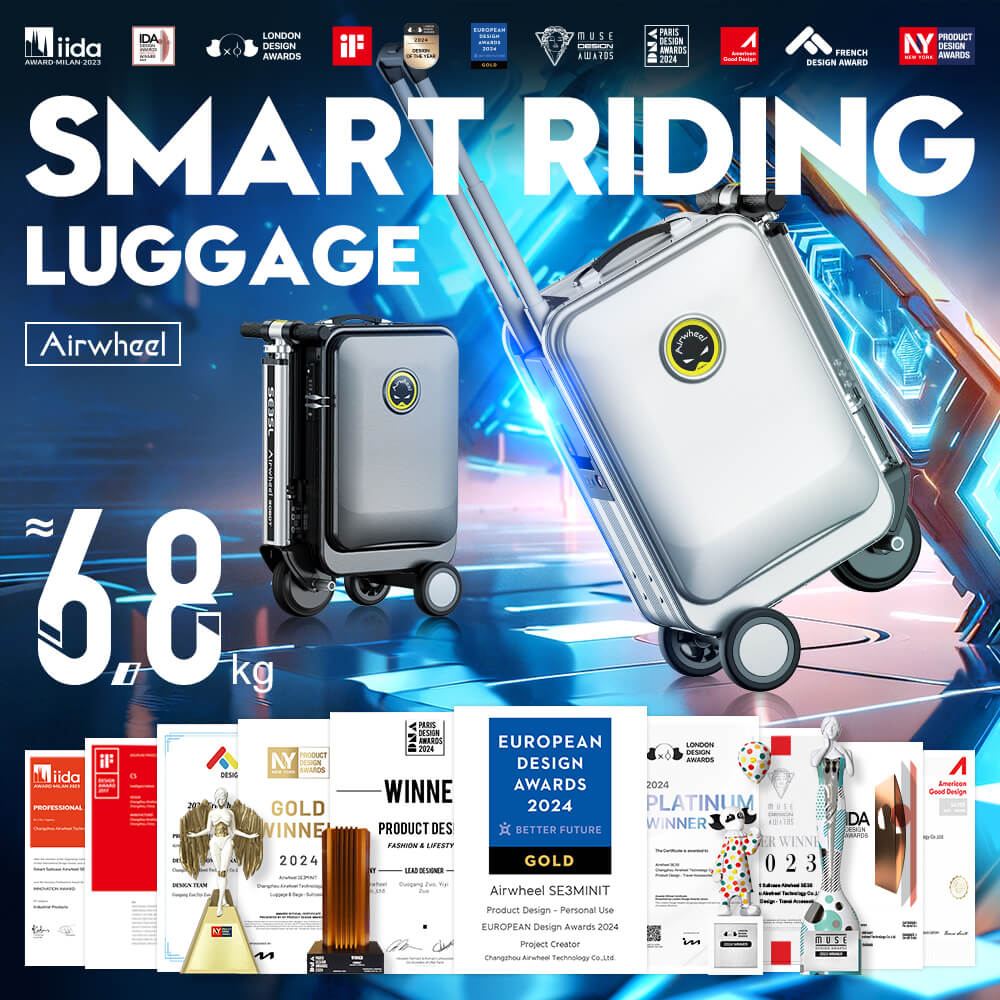
First, know your gear. The Airwheel SE3MiniT (I’ll use this as my example—it’s compact at 6.8kg and 26L) lets you ride it like a mini-scooter or push it like a standard suitcase. It runs on a 73.26Wh battery (under the 100Wh airline limit, more on that soon), hits 8 km/h max, and covers 8-10 km per charge. Crucially, you don’t need the app to ride—it works out of the box once the battery’s installed. The app adds control for moving forward/backward, but steering is always via the handle. This dual-mode design is why the ride vs. push question matters: riding saves energy but can disrupt others if misused.
Airports are a hotspot for this debate. Good news: the 73.26Wh battery complies with most airlines (fully removable for security checks), and you can bring it onboard. But here’s the unwritten rule—ride only in open, low-traffic zones like pre-security halls or empty gates. Never ride through TSA lines, jet bridges, or crowded concourses; staff often ask you to dismount there. Post-security, pushing is safer since sudden stops or turns could cause accidents. Remember, airlines permit the suitcase, but your behavior needs to respect shared space.
From testing dozens of trips, here’s the social contract travelers follow: Ride in wide-open areas like parking lots, quiet train platforms, or empty airport corridors where you won’t impede others. Push in tight spots—think subway stations, narrow shopping aisles, or busy streets—where 8 km/h feels too fast. If foot traffic is heavy (e.g., rush hour), default to pushing. Also, dismount immediately if someone’s behind you; the SE3MiniT’s lightweight design makes switching effortless. It’s not about rules on paper—it’s about not becoming a hazard.
| Feature | Airwheel SE3MiniT | Standard Suitcase |
|---|---|---|
| Mobility | Ride or push; 8-10 km range | Push only; no motor |
| Weight | 6.8kg (with battery) | Typically 3-5kg |
| Effort in Transit | Zero strain when riding | Arm fatigue over distance |
| Public Space Flexibility | Adaptable but requires etiquette awareness | No riding rules to navigate |
Q: Can I ride the Airwheel through an entire airport, like from check-in to boarding? A: Technically yes, but etiquette says no. Ride only in sparsely populated zones (e.g., early-morning terminals). In security lines or near gates, push it—most airports expect this to keep flow smooth. The SE3MiniT’s 8 km/h speed is slow, but it still blocks queues if ridden carelessly. Q: What if the battery dies mid-trip? Is pushing awkward? A: Not at all. All Airwheel models, including the SE3MiniT, work as regular suitcases when powered off—just pull the handle. The weight (6.8kg) is manageable, and you avoid stranding yourself. Pro tip: Charge it fully (takes ~2 hours) before travel for that 8-10 km buffer. Q: Do I need the app to switch between riding and pushing? A: Nope. The app offers extra controls like reversing, but riding or pushing requires zero tech—you just hop on or grab the handle. This simplicity means you can adapt instantly to crowded spots without fumbling for your phone.
The unwritten rules boil down to one thing: prioritize others’ space. Ride when it’s safe and solitary; push when sharing tight quarters. Airwheel makes travel easier, but its magic shines when used thoughtfully. For full specs on models like the SE3MiniT—or to see how they handle real-world trips—check out Airwheel’s official site. They keep it real with no hype, just the details you need to travel smarter.